What a difference a century makes! I was born in the middle of the 20th century which had begun before the invention of powered flight, at a time when there were barely 700 to 800 cars on British roads, a global average of 5 million people were dying of smallpox each year and before Guglielmo Marconi successfully transmitted a radio signal across the Atlantic. A mere four years earlier the first commercial movie had been shown in England.
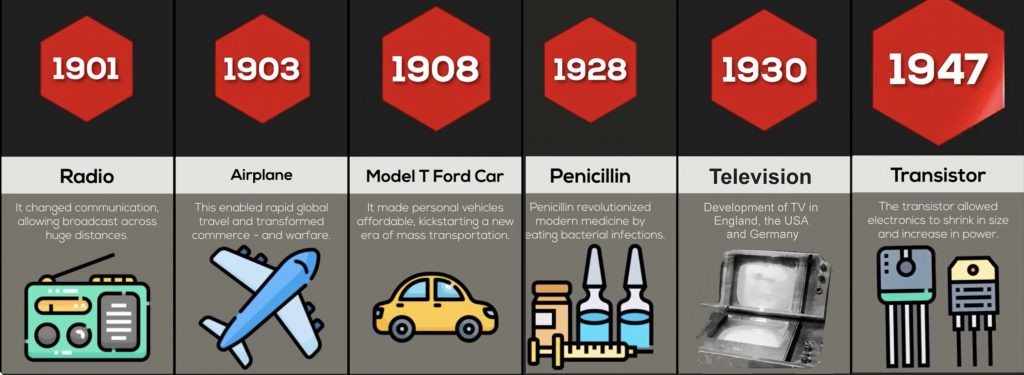
By the end of that century, I was driving around in one of some 25 million cars on Britain’s roads, communicating on a mobile phone, reading news as it happened on televisions or live on the “internet”, and every year catching a non-stop flight from London to ‘Bombay’ taking around 9 hours. And, thanks entirely to vaccination, there hadn’t been a case of smallpox anywhere in the world for 22 years!

Although technological ‘progress’ in the seventeenth century might not appear to have moved at such a break-neck speed, it certainly represented a seismic shift in the evolution of human (and particularly ‘Western’) understanding of our place in the universe. You may remember that I highlighted the fate of Giordano Bruno who was executed in Rome in 1600 for questioning the Book of Genesis.
He believed that everyone could tell true from false by the natural light of reason.
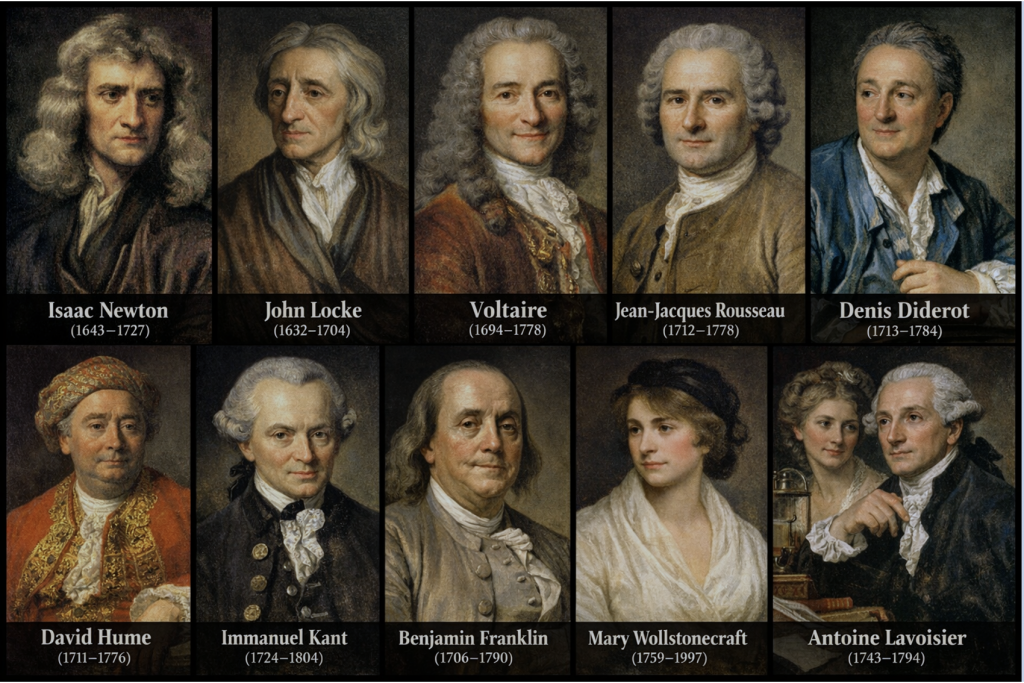
The two centuries of Western history between the times of Archbishop James Ussher and Charles Darwin are often called the ‘Age of Enlightenment’ which is considered by many to have started with the publication of Isaac Newton’s “Principia Mathematica” in 1687. This can be thought of not so much as a mathematical treatise but as an alternative to a faith-based explanation of natural phenomena, replacing it instead with the Kantian notion of the ‘authority and autonomy’ of reason.
In defence of James Ussher, he might well have said that his methodology was also reason-based calculation, and that, rather than simply an irrational believer, he was one of a long line of experts in the ‘science of chronology’. His calculations were rational, just based on more limited source data than available two hundred years later. In the mid 17th century, the bible was simply the best source document for the Earth’s ancient history available to Western academics.
On the evidence available in that source document, observations of the Earth’s strata, fossils, and mountains could most simply be explained as being formed rapidly during a single, global catastrophe such as a flood. According to James Ussher and his contemporary chronologists the biblical timeline provided a sufficient and divinely authorized explanation for Earth’s history, a viewpoint described as ‘Flood Geology’ or Catastrophism.
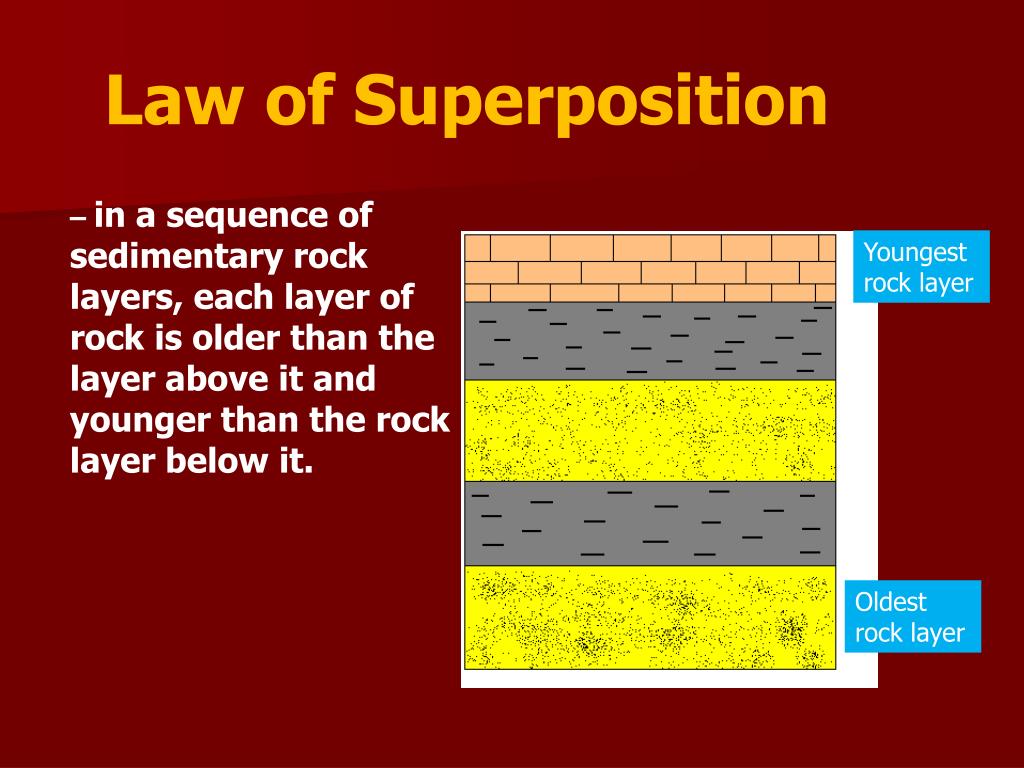
Within 20 years of the publication of ‘The Annals of the World’, Ussher’s chronological masterpiece, Nicolaus Steno, a Danish physician and pioneer of geology, proposed the idea that fossils are the remains of ancient living organisms and that many rocks are the result of sedimentation (the process by which particles suspended in a fluid settle and forming layers of rocks).
To him, it followed that the Earth’s crust would contain a chronological history of geologic events which may be studied by observation of the strata and fossils. He believed that mountains formed by alterations of the Earth’s crust and did not simply grow like trees.
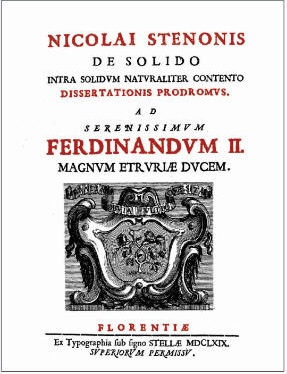
He proposed the ‘Law of Superposition’ – in undisturbed sedimentary rocks, the oldest layers are at the bottom and the youngest at the top (Stratigraphy ) – and the Principle of Original Horizontality, that sediments are in horizontal layers. The implication was that the Earth had undergone a long series of events which would be difficult to squeeze within a 6,000-year span, though he did try!

Footnote – Nicolaus Steno was a devout Catholic who in 1677 became a bishop and apostolic vicar of northern Germany and Scandinavia. He famously pronounced that either “scripture and nature agree” or “nature proves it and scripture does not contradict it.” Science and religion were not as distant from each other in the later 17th century as one might expect.
It was therefore ironic that it was Christian missionaries who significantly dented the chronologists’ biblical world view. Jesuit missionaries accompanied early European colonial explorers to the East and translated Chinese histories which proposed an age of the Earth at around 880,000 years.
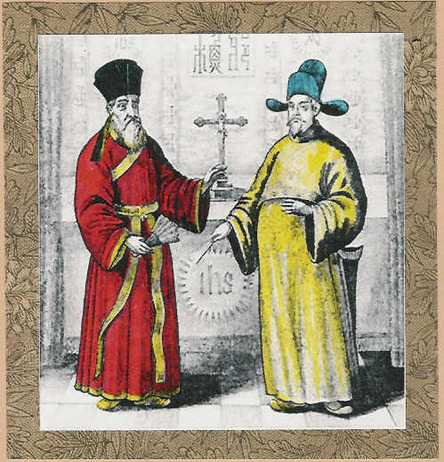
These translated histories were read by Western academics such as Robert Hooke, an English scientist and contemporary of Isaac Newton with an interest in ancient China. Suddenly the Western intelligentsia had a wider range of source material than simply the Old Testament just at a time when scientific enquiry was beginning to impact their world view.
Robert Hooke was a “natural philosopher”, a polymath whose enquiries covered all aspects of the natural world. To physicists, he’s known as the author of Hooke’s Law, to biologists as the developer of the compound microscope, to chemists for his research into combustion, to astronomers for developments in telescopy, and in architecture as second only to Sir Christopher Wren as the designer and rebuilder of London after the Great Fire of 1666. A truly Renaissance man.
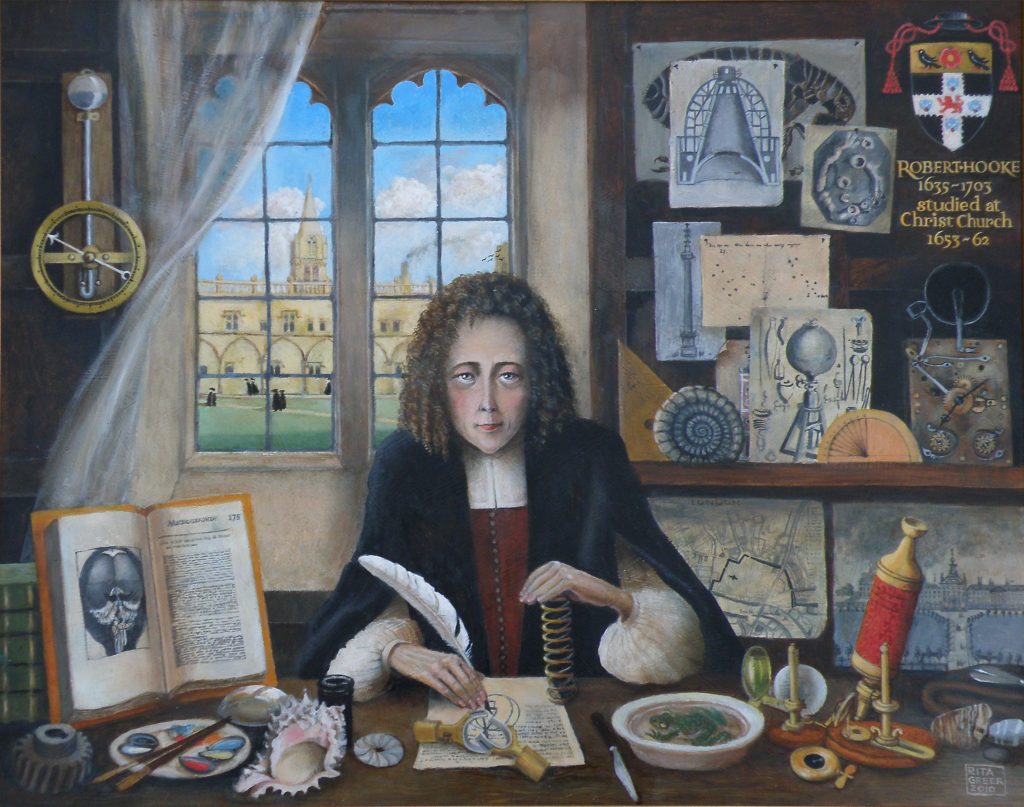
In February 1688, he gave a lecture at the Royal Society in London in which he detailed how geological changes (like earthquakes, volcanic activity, and sea-level shifts) had shaped the Earth over immense periods and used this evidence to propose that the Earth must be millions of years old to allow for the formation of rock strata and the evolution and extinction of species. Although the idea of the Earth being just 6,000 years old persists even today in some places, the march of science was already questioning this chronology within 40 years of the publication of James Ussher’s ‘Annals of the World’. Less than a century earlier, Giordano Bruno was burnt at the stake for much less radical views!
For the next century, the arguments crystallised around two opposing camps: Catastophists who explained all the observations by way of a giant catastrophe (such as a bibilical, global flood – so called ‘Neptunism’) and the ‘Plutonists’ who argued that the Earth was shaped by slow, continuous processes such as erosion, sedimentation, and volcanic action that operated at much the same rate in the past as they do today. This viewpoint, laid out in 1785 by James Hutton, a Scottish farmer and geologist, was also called ‘Uniformitarianism’ and required a timescale of millions, perhaps hundreds of millions, of years, the concept of “Deep Time.’

Meanwhile, biologists were contributing to the debate. In 1813, Georges Cuvier, a French anatomist, showed that fossils represented species that no longer existed. If the Earth was only 6,000 years old how could there be multiple layers of extinct animals separated by vast amounts of time? His explanation was a version of ‘Catastrophism’ suggesting that the Earth had undergone a series of sudden, violent catastrophes that wiped out species, followed by repopulation. This required a timeline in keeping with a concept of ‘deep time’, not a mere 6,000 years.

Cuvier’s work is a reminder that the book of Genesis was written by humans, about humans, not a story of rocks written by rocks.
In the same way as the story of the 5 days of creation is really the backstory of the 6th day, the creation of humans, so the story of the understanding of Deep Time and geological processes is the backstory to the development of life and of conscious beings on planet Earth capable of asking and then trying to answer these questions about Origins.
Which brings us to the story of possibly the most famous person in the story of biological evolution, Charles Darwin, and his lesser known contemporary, Alfred Russel Wallace…
If you enjoyed reading this Click here to be told of new posts and click on the ‘Feeds and shares…’ section on the right side of the screen.